Shibori Folding Techniques: A Comprehensive Guide
Shibori, a Japanese resist-dyeing technique, encompasses diverse methods of binding, stitching, folding, twisting, and compressing fabric for stunning patterns.
PDF resources detail these intricate processes, offering visual guides to mastering techniques like arashi, itajime, kumo, and nui shibori.
Shibori represents a captivating family of Japanese resist-dyeing techniques, extending far beyond simple tie-dye. The term itself, shiboru, vividly translates to “wring,” “squeeze,” or “press,” encapsulating the core principle of shaping fabric to create intricate patterns through dye resistance.
Exploring shibori folding techniques often begins with accessing comprehensive PDF guides. These resources visually demonstrate the diverse methods – from the pole-wrapping of arashi shibori to the clamped precision of itajime shibori, the spiderweb effect of kumo shibori, and the detailed stitching of nui shibori.
These guides are invaluable for beginners, offering step-by-step instructions and visual aids to navigate the complexities of each technique. Understanding the foundational principles of fabric manipulation is key to unlocking the artistic potential of shibori.
Historical Context of Shibori in Japan
Shibori’s roots in Japan are deeply embedded in the nation’s textile history, tracing back over 1,300 years. Initially, it served a practical purpose – mending and reinforcing worn clothing. Over time, it evolved into a sophisticated art form, embraced by both commoners and nobility. Early examples demonstrate resourceful techniques, utilizing readily available materials for resist creation.
The development of diverse shibori folding techniques is documented in historical texts and preserved through generations of artisans. Accessing PDF resources detailing these techniques provides insight into this rich heritage. These guides often showcase traditional patterns and methods passed down through families.
Understanding this historical context enhances appreciation for the artistry and cultural significance of shibori, moving beyond mere technique to recognize its place in Japanese tradition.
Understanding Resist Dyeing Principles
Resist dyeing, at its core, involves preventing dye from reaching certain areas of fabric, creating patterns. Shibori achieves this through various mechanical methods – binding, stitching, folding, twisting, and compressing. These techniques physically block the dye, resulting in unique and often unpredictable designs.
The effectiveness of resist relies on the fabric’s fiber content and the dye’s properties. PDF guides on shibori folding techniques often detail dye compatibility and fabric choices for optimal results. Understanding how different resists interact with dyes is crucial for achieving desired outcomes.
Essentially, resist dyeing is a dance between control and chance, where the artisan manipulates the fabric to guide the dye’s journey, revealing intricate patterns.

Core Shibori Folding Techniques
Shibori boasts diverse folding techniques, including arashi (pole wrapping), itajime (shape clamping), kumo (spider web), and nui (stitched resist).
PDF guides illustrate each method’s unique process.
Arashi Shibori (Pole Wrapping)
Arashi Shibori, translating to “storm shibori,” creates dynamic, jagged patterns reminiscent of a tempest. This technique involves wrapping fabric tightly around a pole – traditionally a PVC pipe or wooden dowel – and binding it securely with string or rubber bands.
PDF tutorials demonstrate how varying the tightness and placement of bindings dramatically alters the final design. The fabric is then dyed, and upon removal, reveals striking, irregular lines. Many PDF resources emphasize the importance of consistent tension during wrapping for a more uniform result, though intentional variations can enhance the “stormy” effect. Detailed guides often include diagrams illustrating optimal binding patterns and troubleshooting common issues like uneven dye penetration. Experimentation with different pole sizes and fabric types is encouraged, as documented in comprehensive PDFs available online.
Itajime Shibori (Shape Clamping)
Itajime Shibori, meaning “shape-dyeing,” utilizes clamping to create precise, geometric patterns. This technique involves folding fabric repeatedly and securing it between shaped objects – often wooden blocks, but also plastic or metal forms. The clamped areas resist the dye, resulting in sharply defined designs.
PDF guides showcase a wide array of shapes and folding methods, from simple triangles and squares to more complex geometric arrangements. These resources detail how the pressure applied by the clamps influences dye penetration, impacting the final pattern’s clarity. Many PDF tutorials emphasize the importance of tightly securing the fabric to prevent bleeding. Comprehensive PDFs often include templates for creating custom shapes and offer advice on selecting appropriate clamping materials for different fabric weights. Mastering Itajime requires precision, as illustrated in detailed PDF instructions.
Kumo Shibori (Spider Web)
Kumo Shibori, translating to “spider web,” produces a distinctive, cracked-ice pattern reminiscent of a delicate web. This technique involves pleating sections of fabric and binding them tightly with thread, creating numerous small, closely spaced resists. The resulting dye pattern is characterized by its intricate network of lines and irregular shapes.
PDF tutorials demonstrate various pleating and binding methods, ranging from simple gathering to more complex accordion folds. Detailed PDF guides emphasize the importance of consistent tension when binding to achieve a uniform crackled effect. Many PDF resources illustrate how varying the binding density impacts the pattern’s fineness. Advanced PDFs explore combining Kumo Shibori with other techniques. Finding a good PDF will help you understand the nuances of thread choice and fabric preparation for optimal results, as shown in comprehensive PDF instructions.
Nui Shibori (Stitched Resist)
Nui Shibori, meaning “stitched shibori,” is a versatile technique where fabric is gathered and stitched in various patterns before dyeing. These stitches act as resists, preventing dye from penetrating the fabric in those areas, creating unique and often highly customized designs. It’s known for its ability to create three-dimensional effects and intricate motifs.
PDF guides often showcase a range of stitching methods, from simple running stitches to more elaborate designs. Detailed PDF tutorials illustrate how stitch density and pattern influence the final result. Many PDF resources emphasize the importance of strong thread to withstand the dyeing process. Comprehensive PDFs provide stitch diagrams and pattern templates. Finding a good PDF will help you understand thread types and fabric choices. Advanced PDFs explore complex stitching and combining Nui Shibori with other techniques, offering a wealth of inspiration.

Detailed Exploration of Folding Methods
PDF guides meticulously detail folding techniques—accordion, triangular, and spiral—essential for arashi, kumo, and other Shibori styles, ensuring pattern precision.
Accordion Folding for Kumo Shibori
Accordion folding is central to achieving the captivating spiderweb patterns of Kumo Shibori. PDF tutorials demonstrate this technique, starting with a square fabric piece. Precise, even folds are crucial; the fabric is systematically folded back and forth, resembling an accordion’s bellows.
These PDF resources emphasize maintaining consistent fold width for uniform results. Once fully folded, the fabric is tightly bound with string or thread, creating compressed areas that resist dye penetration. The binding pattern dictates the final design.

Different binding methods—linear, circular, or randomized—yield varied spiderweb effects. PDF guides often include diagrams illustrating optimal binding techniques. After dyeing, the bindings are removed, revealing the intricate Kumo Shibori design.
Triangular Folding for Arashi Shibori
Triangular folding is a key element in creating the dynamic, sweeping patterns of Arashi Shibori. PDF guides illustrate wrapping fabric tightly around a pole, but the initial fold is crucial. Instead of simple pleats, fabric is folded into a series of triangles along its length.
These PDF resources stress the importance of consistent triangular folds for a balanced design. The tighter the wrap and the more uniform the triangles, the more defined the resulting pattern. After triangular folding, the fabric is secured with string or rope.
PDF tutorials often demonstrate various binding techniques to enhance the Arashi Shibori effect. The pole’s diameter influences the pattern’s scale. Dyeing reveals the striking, irregular lines characteristic of this technique.
Spiral Folding Techniques
Spiral folding, a versatile Shibori method, creates circular and radiating designs. PDF guides detail pinching the fabric at a central point and twisting it into a tight spiral, resembling a rosette. This technique is often used for smaller pieces or as a component within larger, more complex patterns.
PDF resources emphasize securing the spiral firmly with ties – string, rubber bands, or even stitching – to maintain its shape during the dyeing process. The tightness of the spiral and the placement of the ties significantly impact the final result.
Detailed PDF tutorials showcase variations, including multiple spirals or combining spiral folding with other Shibori techniques. The resulting patterns are organic and unpredictable, offering unique artistic expression.
Pleating and Crushing Methods
Pleating and crushing are foundational Shibori techniques, often serving as building blocks for more elaborate designs. PDF guides illustrate various pleating styles – from simple accordion folds to intricate knife pleats – creating linear or textured patterns. Crushing involves randomly compressing the fabric, yielding organic, mottled effects.
PDF resources emphasize the importance of consistent pleating for uniform results, while controlled crushing allows for artistic freedom. Both methods benefit from secure binding with string or thread to maintain the folds or compressed areas during dyeing.
Detailed PDF tutorials demonstrate combining pleating and crushing, layering techniques, and utilizing tools to achieve specific textures. These methods are accessible for beginners and offer a wide range of creative possibilities.

Materials and Tools for Shibori Folding
PDF guides detail essential materials: natural fabrics like cotton and silk, various dyes, clamps, poles, and binding threads.
Nui Shibori requires needles for stitching, while itajime needs shaping materials.
Fabric Choices for Shibori Dyeing
PDF resources emphasize that fabric selection profoundly impacts shibori outcomes. Natural fibers generally yield the most vibrant and lasting results, with cotton and linen being particularly popular choices for beginners due to their affordability and responsiveness to dyes. Silk, while more delicate and expensive, offers a luxurious sheen and exceptional detail in intricate patterns.
The weight of the fabric also matters; lighter-weight fabrics are easier to fold and manipulate, making them ideal for complex techniques like kumo shibori. Heavier fabrics, such as denim or canvas, can hold sharper creases for bolder, more defined designs. Consider the weave – tightly woven fabrics resist dye penetration more, creating stronger contrasts, while looser weaves allow for softer, more diffused effects.
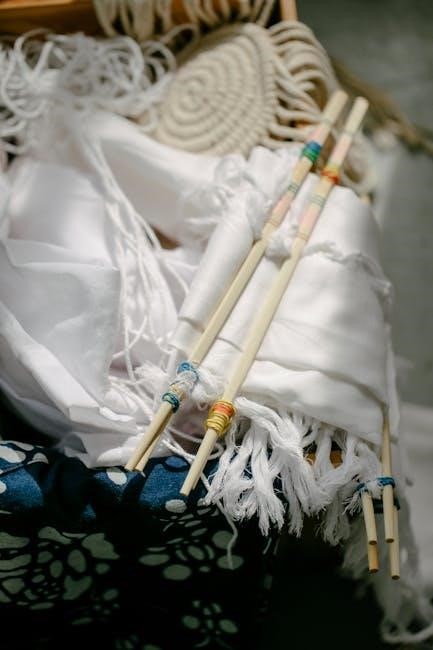
Synthetic fabrics are generally not recommended for traditional shibori, as they don’t readily absorb natural dyes. Always pre-wash your fabric to remove any sizing or finishes that could interfere with dye absorption, ensuring a clean and even color distribution.
Dye Types Compatible with Shibori
PDF guides on shibori frequently detail dye compatibility. Traditional Japanese shibori often utilizes natural dyes derived from plants like indigo, madder, and persimmon, yielding beautiful, earthy tones. These dyes require mordants – substances that help the dye bind to the fabric – for colorfastness.
However, modern synthetic dyes, such as fiber-reactive dyes (like Procion MX), are also widely used for their ease of use, color range, and washability. These dyes work exceptionally well with cellulose fibers like cotton and linen. Acid dyes are suitable for protein fibers like silk and wool.
When choosing a dye, consider the fabric type and desired color intensity. Always follow the dye manufacturer’s instructions carefully, and test the dye on a scrap of fabric before applying it to your final piece.
Clamps, Poles, and Binding Materials
PDF tutorials on shibori emphasize the importance of appropriate tools. For arashi shibori, PVC pipes or wooden poles are essential for wrapping the fabric tightly. The diameter of the pole influences the pattern’s scale. Clamps, ranging from simple binder clips to specialized shibori clamps, secure the fabric during the folding and dyeing process, preventing unwanted dye penetration.
Binding materials, like cotton string, rubber bands, or even dental floss, are crucial for creating resist patterns. The tightness of the binding affects the final design; tighter binding yields sharper lines. Natural fibers are preferred for binding as they are less likely to damage the fabric.
Selecting durable, non-reactive materials ensures clean, defined shibori patterns and prevents discoloration.
Needles and Thread for Nui Shibori
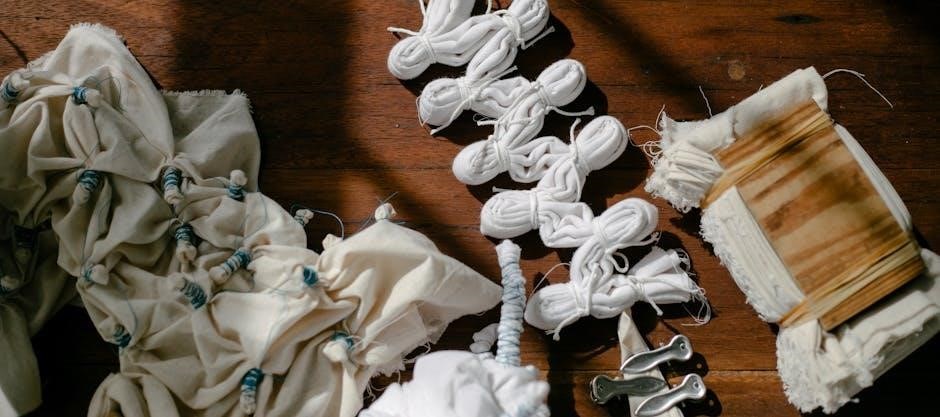
PDF guides dedicated to nui shibori, or stitched resist, highlight the specific requirements for needles and thread. Fine to medium-weight needles are recommended to create small, precise stitches without unduly damaging the fabric. The needle’s eye should be large enough to accommodate the chosen thread easily.
Thread selection is critical; 100% cotton or silk thread are commonly used due to their strength and compatibility with dyes. The thread color can be considered – contrasting colors create visible stitch patterns, while matching colors offer a more subtle effect.
Strong, consistent stitching is vital for effective resist. Tutorials often demonstrate running stitches, backstitches, and other techniques for creating intricate designs.
Step-by-Step Shibori Folding Tutorials
PDF tutorials provide detailed, visual instructions for various shibori techniques, including arashi, itajime, kumo, and nui, guiding beginners through each fold.
Arashi Shibori: A Beginner’s Guide
Arashi Shibori, meaning “storm” in Japanese, creates dynamic, diagonal patterns resembling windblown rain. PDF guides begin with fabric preparation – typically cotton or linen – and demonstrate wrapping it tightly around a cylindrical pole.
The key is consistent pressure during wrapping, ensuring even pleating. These PDF resources illustrate securing the fabric with string or rubber bands at intervals, creating compressed sections. Dyeing follows, often using indigo, resulting in striking contrasts.
Beginners benefit from clear diagrams showing wrapping angles and binding techniques. PDF tutorials emphasize removing the pole and bindings carefully post-dyeing to reveal the arashi pattern. Experimentation with pole diameter and binding tightness yields varied results, making it a versatile technique.
Itajime Shibori: Using Shapes and Clamps
Itajime Shibori, translating to “shape-dyeing,” utilizes rigid shapes – wood, plastic, or metal – to create precise, geometric patterns. PDF tutorials showcase folding fabric repeatedly around these shapes, ensuring tight creases. Clamps firmly secure the folds, acting as a resist during the dyeing process.
These PDF resources often feature diverse shape options, from simple squares and triangles to complex custom designs. The choice of shape directly influences the final pattern. Dye penetration is limited to the exposed areas, resulting in sharp, defined motifs.
Beginners find PDF guides helpful for understanding clamping techniques and fabric layering. Post-dyeing, removing the shapes reveals the intricate itajime design. Experimentation with different shapes and folding methods unlocks a wide range of creative possibilities.
Kumo Shibori: Creating Spiderweb Patterns
Kumo Shibori, meaning “spider web,” achieves its namesake design through a unique pinching and binding technique. PDF guides illustrate how to pleat fabric and then bind small sections with thread, creating a network of resist points. These points, when dyed, resemble a delicate spiderweb.
PDF tutorials emphasize the importance of consistent pleating and secure binding for a defined pattern. Varying the size and density of the bound sections alters the web’s appearance. This technique allows for organic, freeform designs, unlike the geometric precision of Itajime.
Detailed PDF resources often include diagrams showing different binding arrangements. Mastering Kumo Shibori requires patience and practice, but the resulting textures are captivating. Experimentation with thread color and dye shades enhances the visual impact.
Nui Shibori: Basic Stitching Techniques
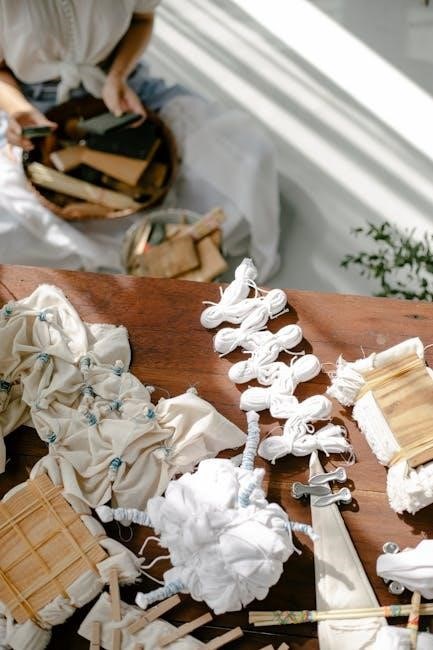
Nui Shibori, or stitched resist shibori, is arguably the most versatile technique, offering incredible design control. PDF guides detail various stitches – running, back, and satin – used to create patterns. These stitches pull the fabric, creating a three-dimensional texture when dyed.
PDF tutorials emphasize the importance of thread tension; tighter stitches yield more pronounced resists. Simple running stitches can create subtle textures, while complex patterns require meticulous planning and execution. The choice of thread also impacts the final result.
Comprehensive PDF resources showcase examples ranging from simple geometric designs to intricate pictorial motifs. Mastering Nui Shibori demands patience, but the artistic possibilities are limitless. It’s a technique favored for its ability to create unique, personalized textiles.
Resources and Further Learning
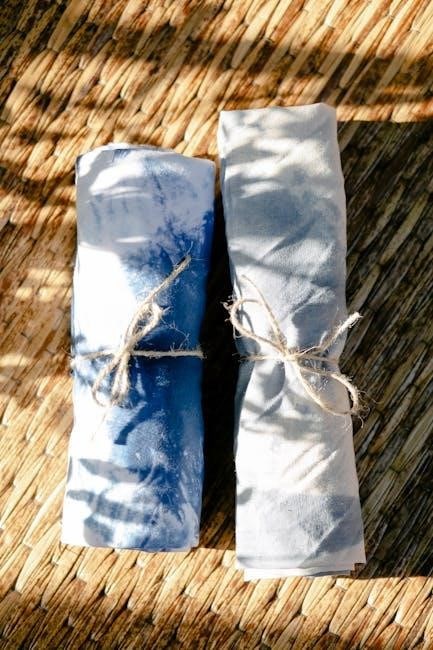
PDF guides, online tutorials, and books by experts like Jane Gibson offer in-depth shibori instruction. Explore interactive zoom courses for hands-on learning!
Online Tutorials and Websites
Numerous online platforms provide accessible shibori folding technique tutorials, often available as downloadable PDF guides. Websites dedicated to textile arts frequently host detailed instructions and visual demonstrations of various methods, including arashi, itajime, kumo, and nui shibori.
Specifically, resources like Honestly WTF’s 2010 blog post remain highly regarded for their clear explanations of dyeing processes. Searching for “shibori tutorial PDF” yields a wealth of downloadable resources. Many artists also share their expertise through personal blogs and video platforms, offering unique perspectives and step-by-step guidance.
Furthermore, platforms like YouTube host numerous video tutorials demonstrating different folding and binding techniques. These visual aids are invaluable for understanding the intricacies of each method and achieving desired patterns. Don’t hesitate to explore diverse sources to broaden your understanding and refine your skills;
Books on Shibori Techniques
Several authoritative books delve deeply into the art of shibori, offering comprehensive guides to folding techniques and resist dyeing. Janes book, “Stitched Shibori,” is frequently cited as a detailed resource for nui shibori and other stitched resist methods. These publications often include detailed diagrams and photographic instructions, complementing online PDF tutorials.
Beyond specific techniques, books explore the historical context and cultural significance of shibori in Japan. They provide a broader understanding of the craft, enriching the learning experience. Many books also feature project ideas, inspiring creativity and experimentation.
While digital resources like PDFs are convenient, physical books offer a tactile and immersive learning experience. They allow for focused study and repeated reference, making them invaluable additions to any shibori artist’s library.
Shibori Workshops and Classes
Immersive workshops and classes provide hands-on experience with shibori folding techniques, going beyond what’s available in PDF tutorials. Interactive sessions allow for personalized guidance from experienced instructors, addressing individual challenges and refining skills. These classes often cover a range of techniques, from basic arashi to intricate nui shibori.

Zoom courses, like “Shibori Stream,” offer convenient access to expert instruction remotely. In-person workshops foster a collaborative learning environment, encouraging peer interaction and inspiration. Both formats provide opportunities to experiment with different fabrics and dyes.
Supplementing online resources and books with practical training accelerates skill development. Workshops often include material kits, simplifying the learning process and ensuring access to quality supplies.